“OUIDA” - FORGOTTEN VICTORIAN BEST-SELLING AUTHOR
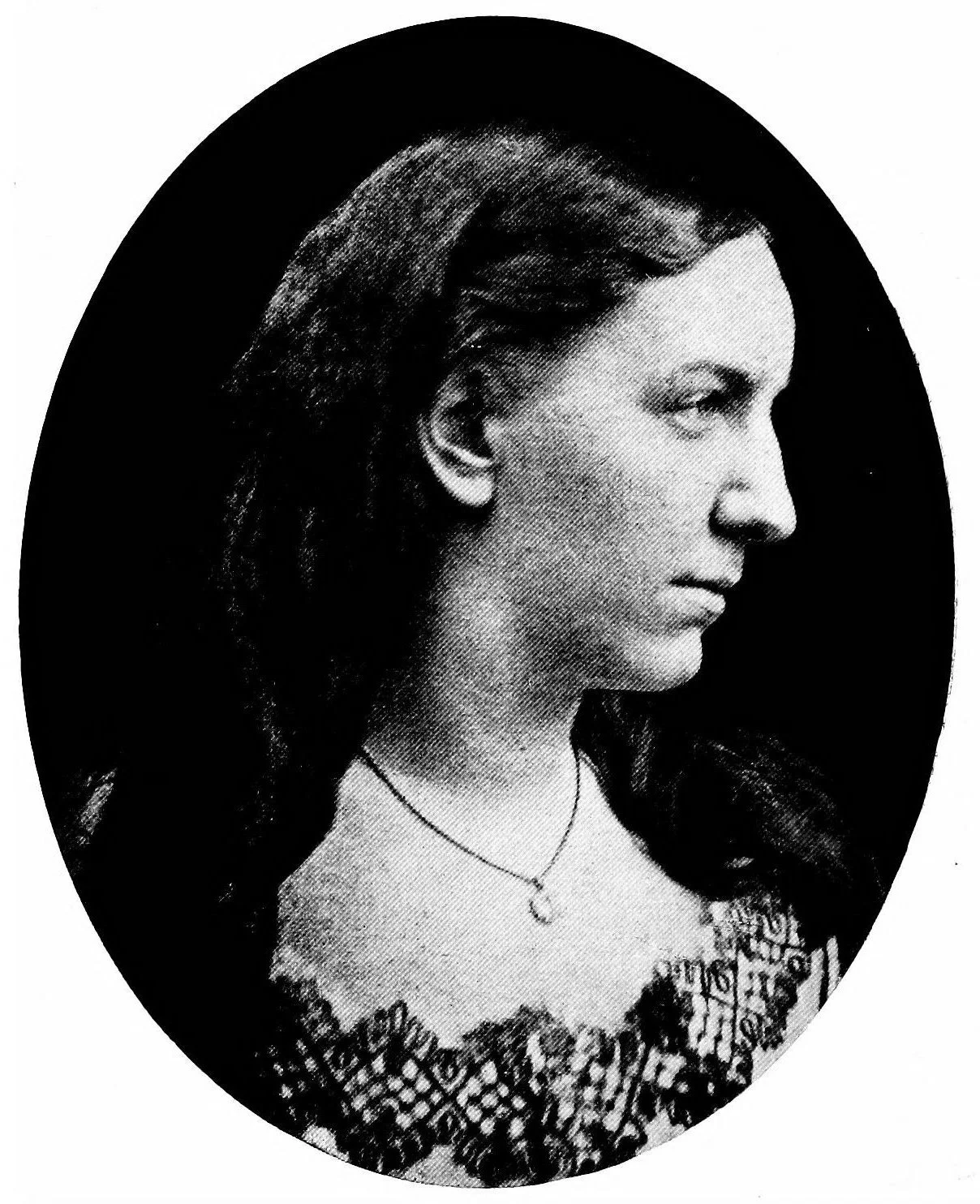
If you were to look at a list of best-selling authors from late nineteenth century Britain, you might be surprised : alongside the expected Charles Dickens, Wilkie Collins and Thomas Hardy, are names almost nobody has heard of : Rhoda Broughton, James Payn and today’s subject, Ouida.
Ouida is so obscure that I could only find one YouTuber mentioning her, among the many channels dedicated to Victorian literature.
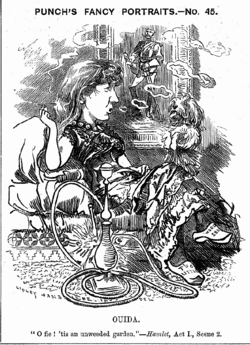
Ouida is the pen-name of Maria Louise Ramé (1839-1908), an English-French novelist who was the talk of the town in her day. Writing more than forty novels as well as short stories, essays and pieces for children, she lived a flamboyant life of luxury and hosted salons frequented by the likes of the aforementioned Wilkie Collins and Oscar Wilde. Like Oscar Wilde, she lived beyond her means and ended up in poverty in Italy at the end of her life.
She was a committed supporter of animal rights and an early anti-vivisectionist.
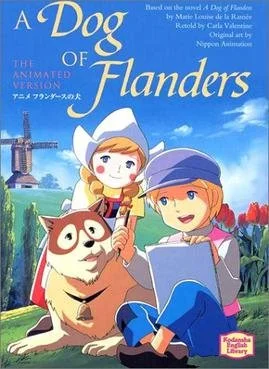
Ironically, despite her obscurity in her home nation, she is known well in Asia, especially Japan, due to a cartoon version of her sentimental children’s story ‘A Dog of Flanders’ having been released in the 1970s.
Her writing was criticised a lot during her lifetime : I’m paraphrasing madly here, but one critic came to the conclusion that her novels were “really good but also totally crap at the same time”!
I decided to read her two most famous works to find out for myself. I started with ‘A Dog of Flanders,’ (1871) which didn’t make much of an impression on me given that it was intended for children, although I was quite surprised at its bleakness.
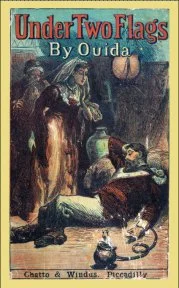
Next I tried her most notable work, the novel ‘Under Two Flags.’ (1867).
This long novel (600 pages-ish) is a story which spans both the familiar Victorian world of the gentry (personified by our main character Bertie Cecil) and the altogether unfamiliar setting of the French colony of Algeria. It’s part social / romantic drama, part sensation novel, part adventure story.
First I’ll summarise my feelings about this book - it’s really exactly as that critic said : ultimately great, both entertaining and educational, but you certainly have to get used to her prose style which may be daunting for many readers. If you’re new to Victorian literature, this is definitely not the place to start, but if you have a few under your belt already, then yes, I heartily recommend it.
Let’s get into the details (and don’t worry, I’ll be keeping this spoiler-free).
THE BAD
Ouida writes very long, very ornate and flowery sentences and she often repeats herself. Yes, most Victorian authors use a lot of what modern readers will see as ‘difficult’ words, but with Ouida her meandering prose exacerbates things. However, I got used to it after a while, and soon found I could read it pretty fluidly.
The other difficulties are the references and her frequent use of French. Any book is of its time, but Ouida seems to throw in more current cultural references than most, and this is compounded by a lot of obscure military terminology. Also, the French she sometimes employs is apparently not of the standard variety, but a kind of military argot.
THE GOOD
I’ve now read over sixty Victorian novels, and this one really stands out as something unique. Even the the first part, concerning the familar British aristocracy, is decidedly more racy than most. Ouida openly describes men having multiple mistresses, some of them married women, and the word ‘lover,’ which usually denotes a fairly benign admirer in Victorian fiction, here clearly means casual sexual partner.
Once the setting shifts to Algeria, things get even more revolutionary. The local Arabs / Berbers are described with admiration. The miserable lives of the French soldiers are contrasted with the luxurious existence of their officers in some very pointed social commentary. Battle scenes are graphic and bloody. More extraordinary still is the character nicknamed ‘Cigarette,’ an eighteen year-old French girl who is the very antithesis of the Victorian feminine ideal : she takes part in combat, kills people, and has multiple casual sexual liasons. The descriptions of the army camp life in which she is a part are vivid and realistic.
All in all, once you can used to Ouida’s prose, the book is quite a page-turner and I was never bored. On the strength of this, I want to read more of her, and anyone wanting to go a bit deeper into the world of Victorian literature is missing out if they don’t at least give ‘Under Two Flags’ a go.
This book doesn’t seem to be in print, aside from a few dodgy-looking print-on-demand options and a comic book abbreviated version, but you can get a free ebook from Project Gutenberg, and Delphi Classics have a collection of her works (also including ‘A Dog of Flanders’) for a couple of dollars.