KYOTO MICRO-TRIP : MARCH 2026
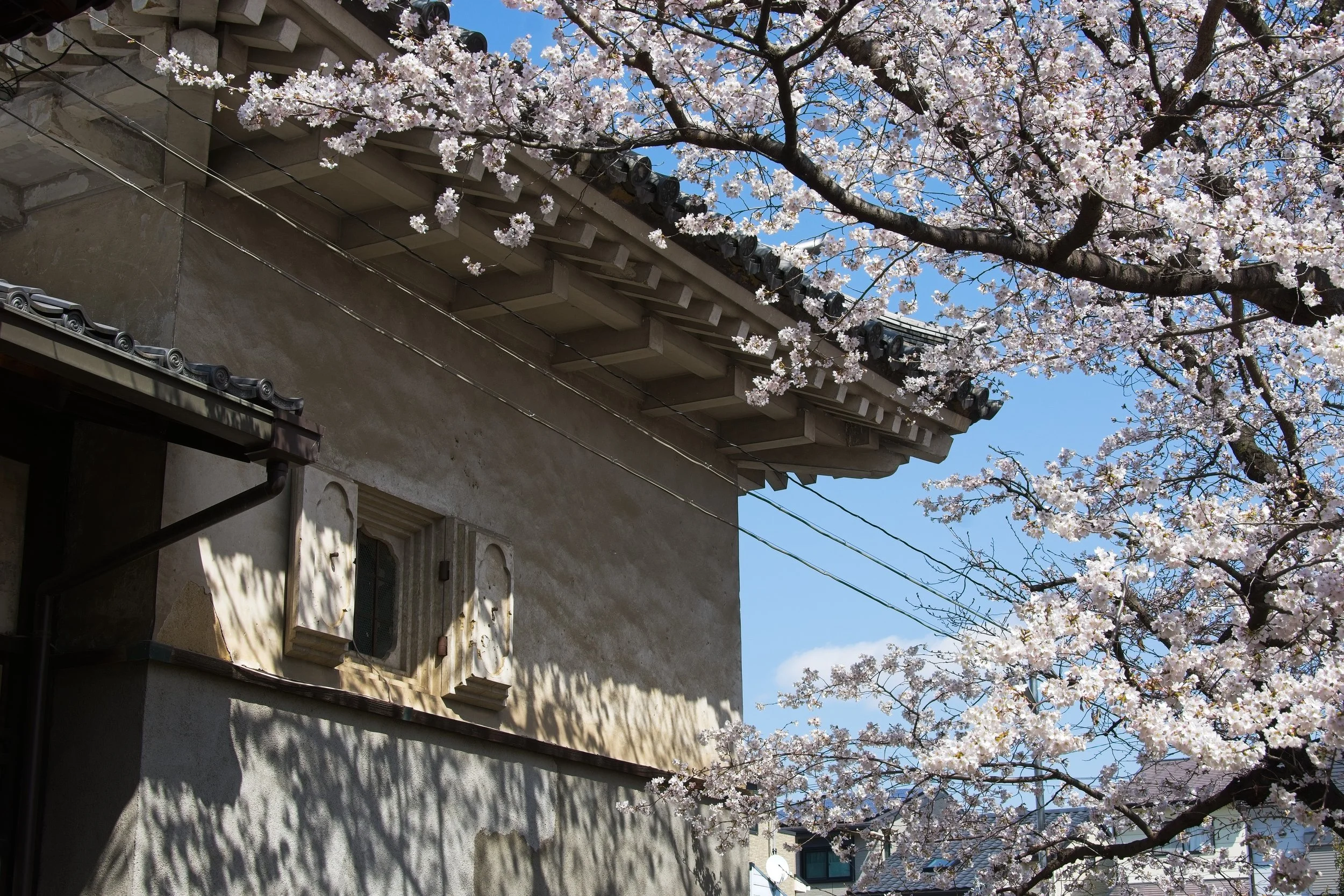
Myoken-ji
INTRODUCTION
In recent years I’ve largely been unable to travel due to various health-related issues, but in March I summoned up enough courage for an impromptu micro-trip to Kyoto.
Kyoto is, in my opinion, one of the greatest cities in the world. I lived in Kyoto for a few months and I must have visited it more than thirty times over the years, and still it never fails to disappoint or to offer up something new. There aren’t many places in the world you can say that about.
[Note : all photos in this blog are by me.]
THE BEST WAY TO SEE KYOTO
The best way to see Kyoto is to walk, to throw away your conventional guidebooks and disregard the YouTube, Instagram and TikTok nonsense.
Both Japanese tourists and the flood of Westerners now pouring in seem to have limited imagination and just flock to three places : Kiyomizudera, Kinkakuji and the Arishiyama area. If you have any desire to experience a bit of Zen tranquility and contemplation, then you’ll avoid these places like the plague.
Kyoto is so full of temples and shrines that a good strategy is just to block off an area of the map and set out to explore it, using something like Google Maps to show you where the temples and shrines are. You are certain to discover little-known treasures where you’ll be away from the noisy hordes.
THE SCOPE OF THE TRIP
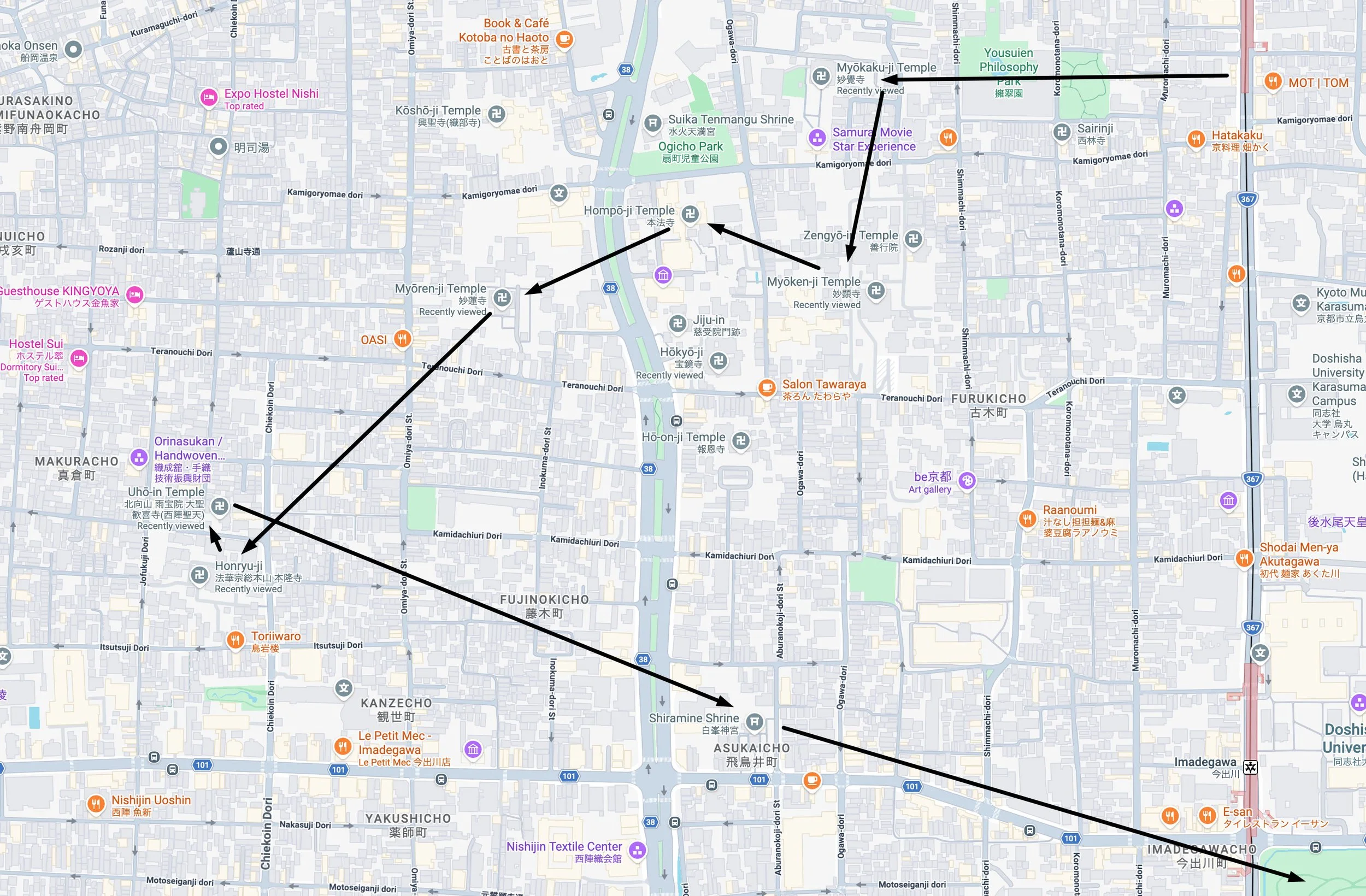
For this trip I’d earmarked the area to the northeast of the Imperial Palace.
After arriving at Kyoto Station by Shinkansen I took the subway and went six stops north, getting out at the Kurumaguchi Station before heading west to check out a number of places I thought might be of interest.
The last time I was in Kyoto, also in late March, it was snowing and below freezing, but this time the weather was glorious : in fact it was so warm that the cherry blossoms had come out early, which greatly enhanced the day’s sightseeing.
MYOKAKU-JI
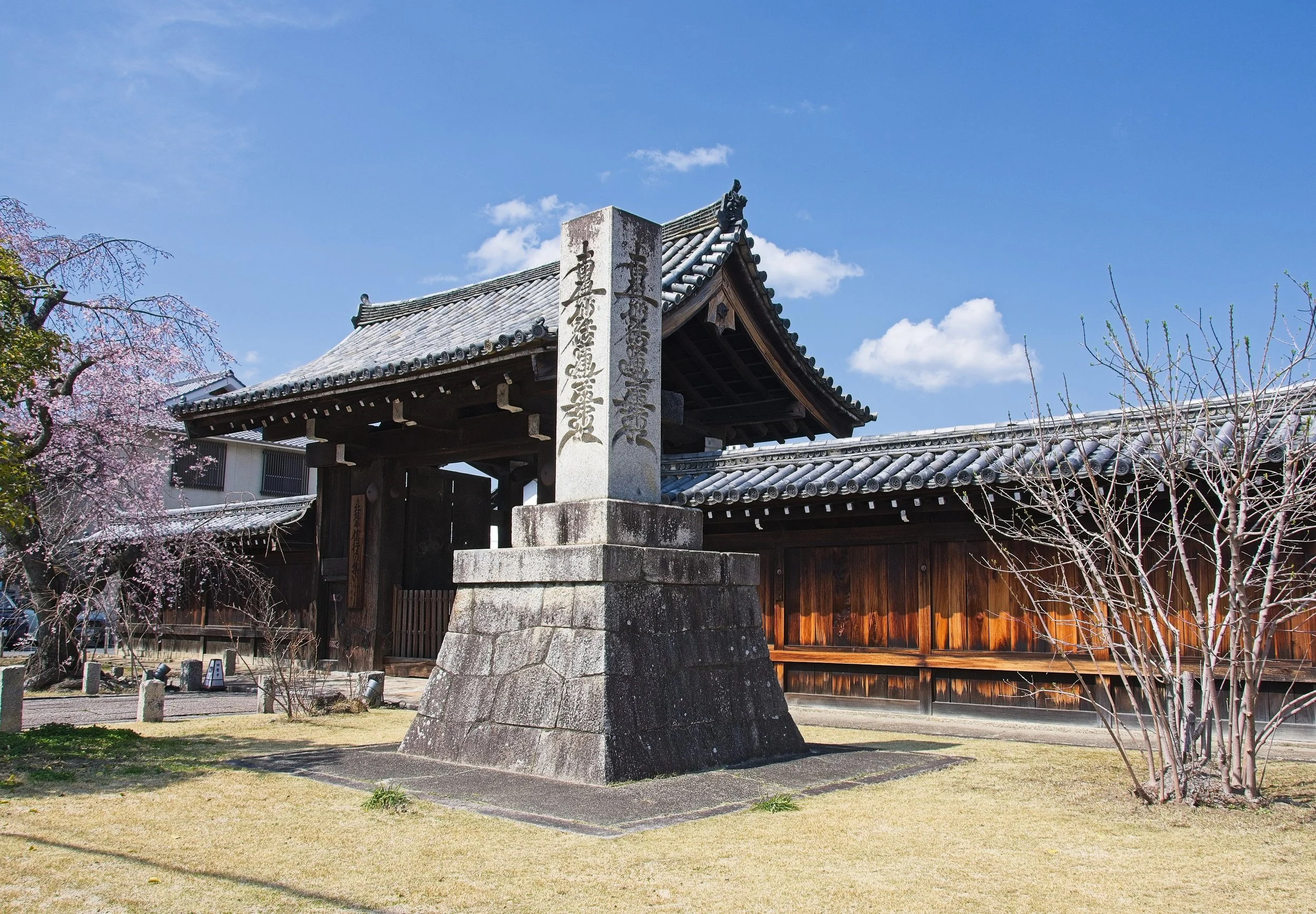
Myokaku-ji
First stop was Myokakuji temple. It felt great to strolling along Kyoto’s narrow streets once more, ready for new experiences. That may seem trite, but there really is nothing like revitalising yourself by seeking out new places.
Myokakuji dates from the sixteenth century in this location, and is affiliated with the Nichiren sect of Buddhism (speciality: the chanting of the mantra ‘nam-myoho-renge-kyo’ - really quite mesmeric and wonderful if you ever get to hear a group of monks chanting it).
Now nobody would pretend that this temple is a top-tier wonder of the world - but appearances can be deceptive. I approached from behind and found a fairly normal temple hall in an unexceptional setting - but then I found the front gate, a traditional structure which was framed by a blooming cherry tree. Absolutely gorgeous.
MYOKEN-JI
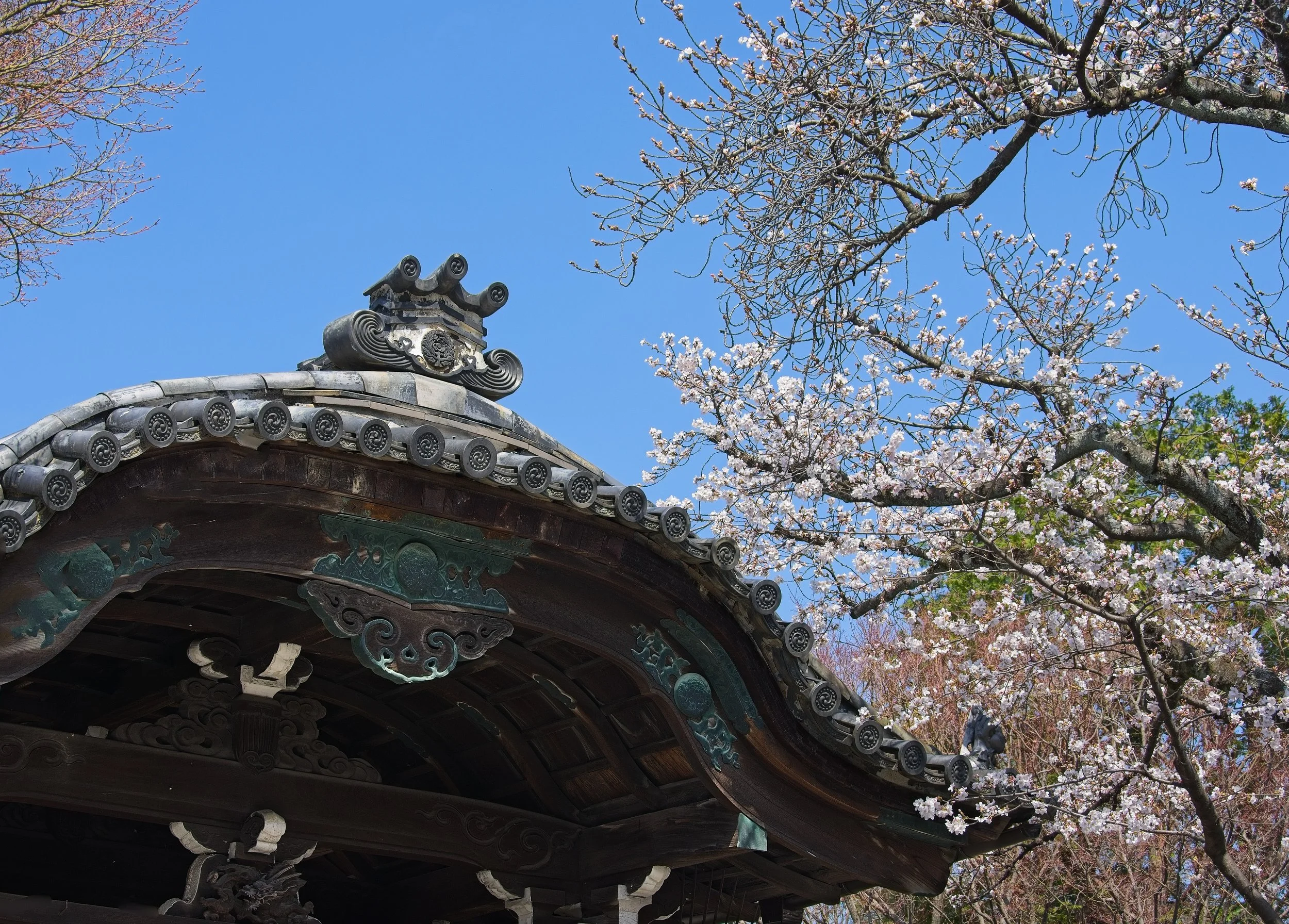
Myoken-ji
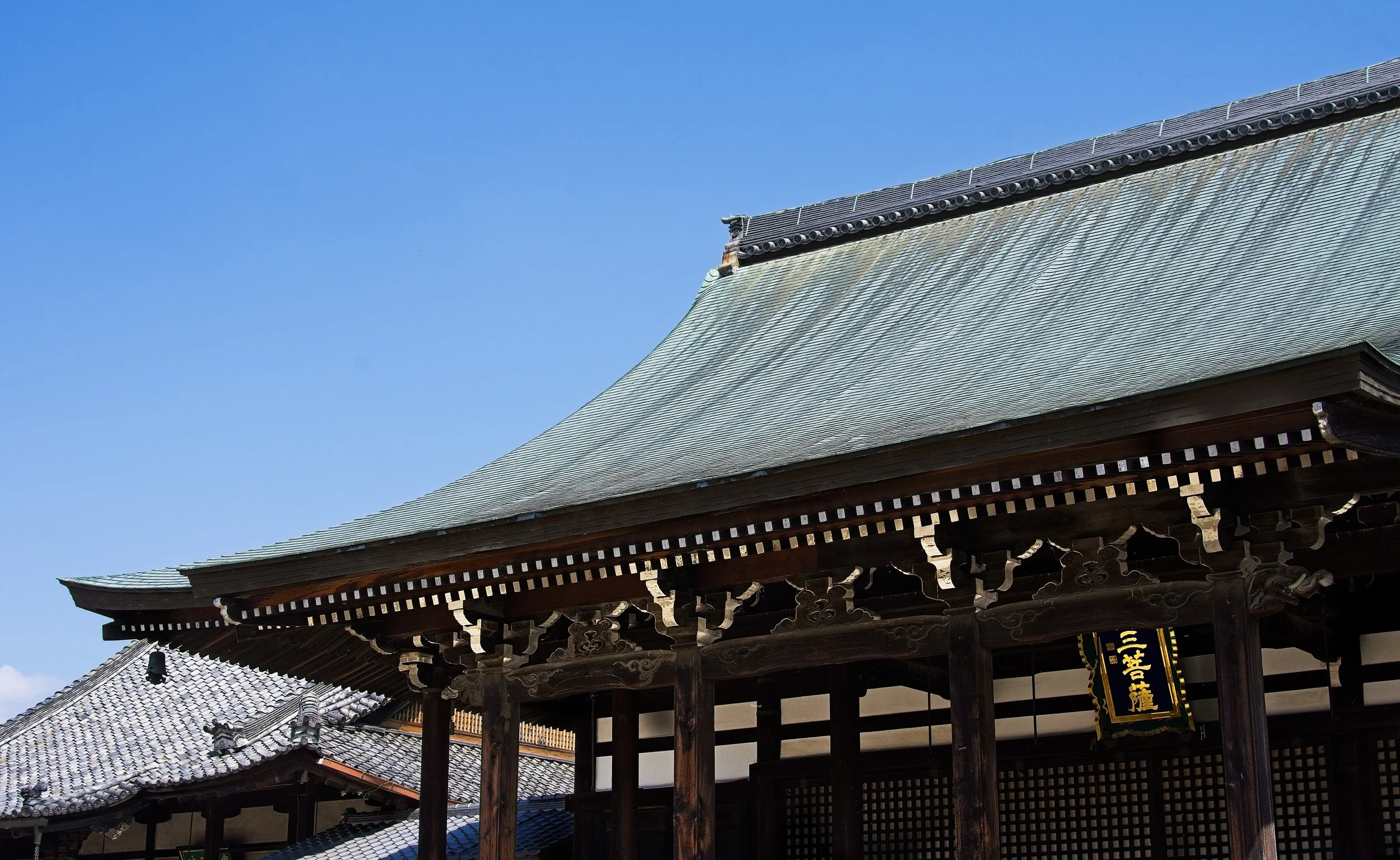
Next stop was the nearby Myokenji, another sixteenth century Nichiren sect temple (yes, I know, a lot of the temples in this area have similar-sounding names, which can be very confusing). Here I struck gold. Again, I entered the place from a small side gate, and was initially greeted by some workmen fixing something up. Soon, however, I found myself in an absolute gem of a temple - compact but impressive raked stone gardens, an imposing main hall, beautiful historic side buildings and blossoming cherry and peach trees everywhere. A photographer’s paradise, and once again, just a smattering of Japanese tourists and one ‘in the know’ European couple with whom I exchanged a smug nod to say, “yes, we are Kyoto experts and not like the smelly hordes who are TikToking furiously in front of Kinkakuji and Kiyomizu-fucking-dera.” Lol.
Myoken-ji
It is at this juncture that I have to admit an egregious error on my part. Yes, I had researched these temples beforehand, but in the excitement of the moment I totally overlooked the fact that Myokenji has an interior stone garden and mini bamboo forest. You see, normally Japanese temples are of two kinds - the larger touristy ones and the lesser-known ones. The former have obvious ticket booths where you can purchase an entry ticket if you wish to see the interiors. The latter often have no ticket booth, and as they are predominantly working temples, you often cannot go inside. At Myokenji I couldn’t see any ticket booth, so I assumed it wasn’t possible to go into the buildings, and there was plenty of interest outside to keep me occupied. Plus, I’d totally forgotten about the treasure within I’d seen in reviews. Doh!
Sadly this would not be the only time this happened on this day…
HONPO-JI
Honpo-ji
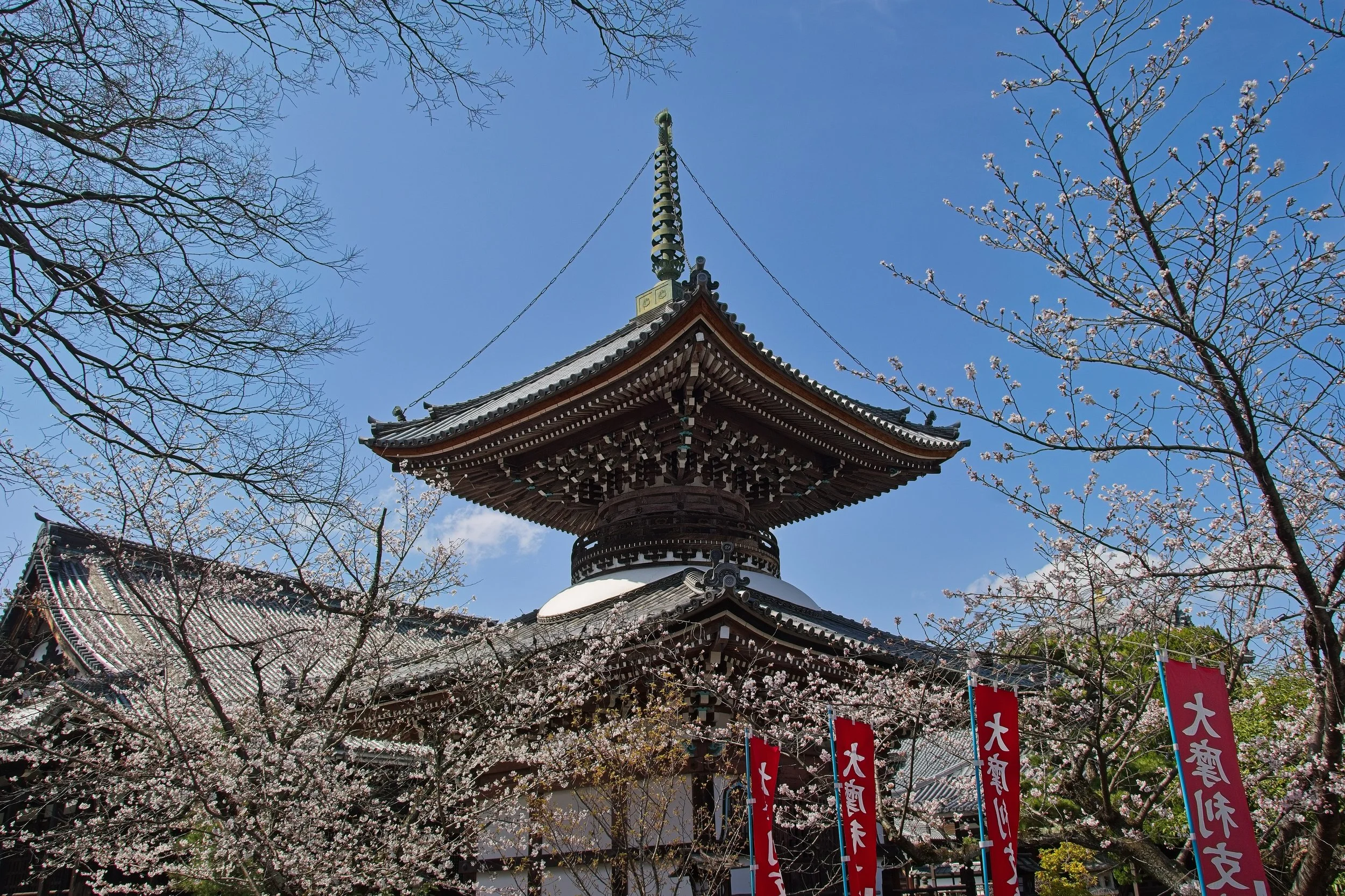
Next up was Honpoji, a short walk away. Just before the entrance was a wonderfully restored street of old traditional Japanese houses which detained me and my camera for a while.
Honpoji, once again a temple of the Nichiren sect, soon revealed itself to be another gem. Compact precinct with an avenue of blooming cherry trees framing a pagoda and main hall - the Nikon D7200 was soon snapping away, but I spent a lot of time not taking pictures and just staring, and absorbing the sight and atmosphere.
Unfortunately I once more made the mistake of forgetting my research and not seeing the internal gardens and sixteenth century paintings because I was so blown away by the scenery and couldn’t see a ticket booth anywhere. Don’t make my dumb mistake, people!
MYOREN-JI
Myoren-ji
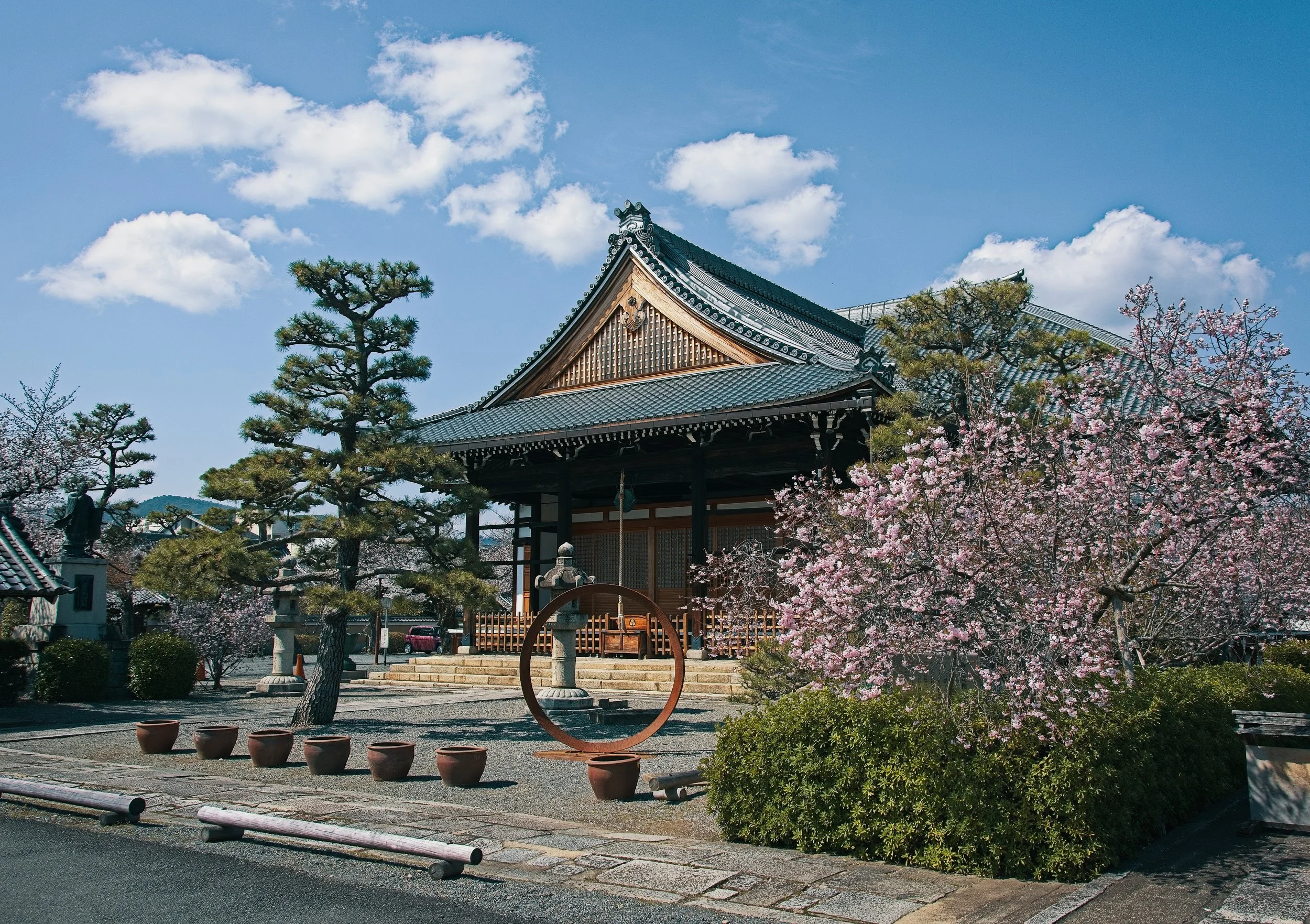
The next stop was Myoren-ji, another Nichiren sect temple that was nice, but not exceptional, mainly distinguished by a strange modern art installation in front of the main hall, which I rather liked. I quickly moved on, but later investigation showed that I had for the third time this trip missed something interesting on the inside : another raked stone garden. But seriously, temple guardians, could you make the entrances and ticket booths a bit more conspicuous? I didn’t see either…
HONRYU-JI & UHO-IN
After this I moved on to my next place of interest, Honryuji. When I located the front gate, it was liberally decked in scaffolding and didn’t give the appearance of being open. I peered inside just as a pair of Japanese women went in, but I thought maybe they were here for some sort of private function - you should always bear in mind that these are working temples, so be respectful and try not to blunder in on some ceremony or other.
I turned and headed off down the street, but then the one of the two women rushed out after me and asked in excellent English if I wanted to see the temple because it was, contrary to appearances, actually open. I went in and then spent a very pleasant half hour or so chatting to the two, who turned out to be a very amusing university professor and her student. They also took me to another nearby temple, the tiny but interesting Uho-in.
(Sorry, no worthwhile pics from these two temples, as I was too busy chatting…)
THE BENEFITS OF SOLO TRAVEL : MEETING THE LOCALS
This illustrates one of the benefits of solo travel in Japan - every time I go to Kyoto and am pottering around temples and shrines, away from the main tourist areas, I’m approached by locals for a chat. If you’re in a noisy group and just sticking to the crowded sites, this just isn’t going to happen and you’ll be missing out on a vital part of visiting another country - actually talking to real people who live there.
A ‘SLICE OF LIFE’ IN A LOCAL PARK
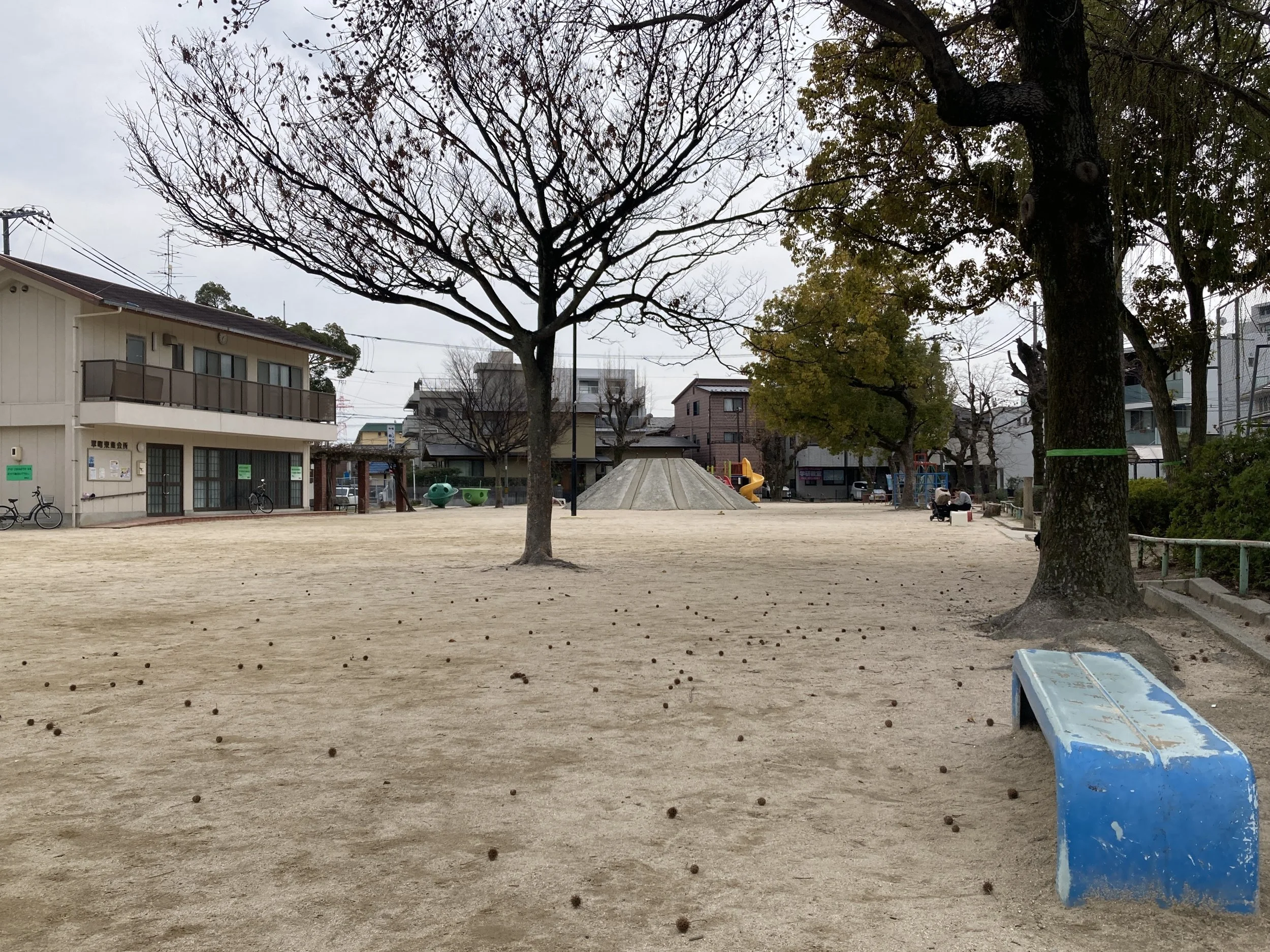
This is what Japanese people think a park is. (Not the actual one I went to in Kyoto).
After I left the two, I was feeling a bit tired, so grabbed some sandwiches and a coffee from a convenience store, located the nearest park and took a break. I should interject with a word about Japanese ‘parks’ here - while the word may denote some notion of grassy lawns and duck ponds to westerners, in Japan they’re just a small square fenced off area of compacted gravel with a few trees, some seats and a motley collection of slides and swings for kids. Not at all beautiful or conducive to much relaxation or connection to nature. I’ve never been able to find out why grass lawns don’t exist in Japan.
Anyway, as I sat there, I was treated to an interesting ‘slice of life’ panorama unfolding before me. Unruly kids chasing around, a bunch of old people in wheelchairs being dragged out for an airing under some cherry trees, and then a young mum getting shouted at by some old ladies for letting her kid go too high on the swings. It was actually quite interesting sociologically and anthropologically - I highly recommend park people-watching for finding out first hand how social interactions work in Japan - young kids given leeway to be noisy and annoying in lieu of the unremitting grind that awaits them later in the workplace, the burden of too many old folks on society, and the respect (often unwarranted) shown to elders (the young mum replied politely to the interfering old woman instead of telling her to mind her own business).
SHIRAMINE SHRINE & IMPERIAL PALACE GARDENS
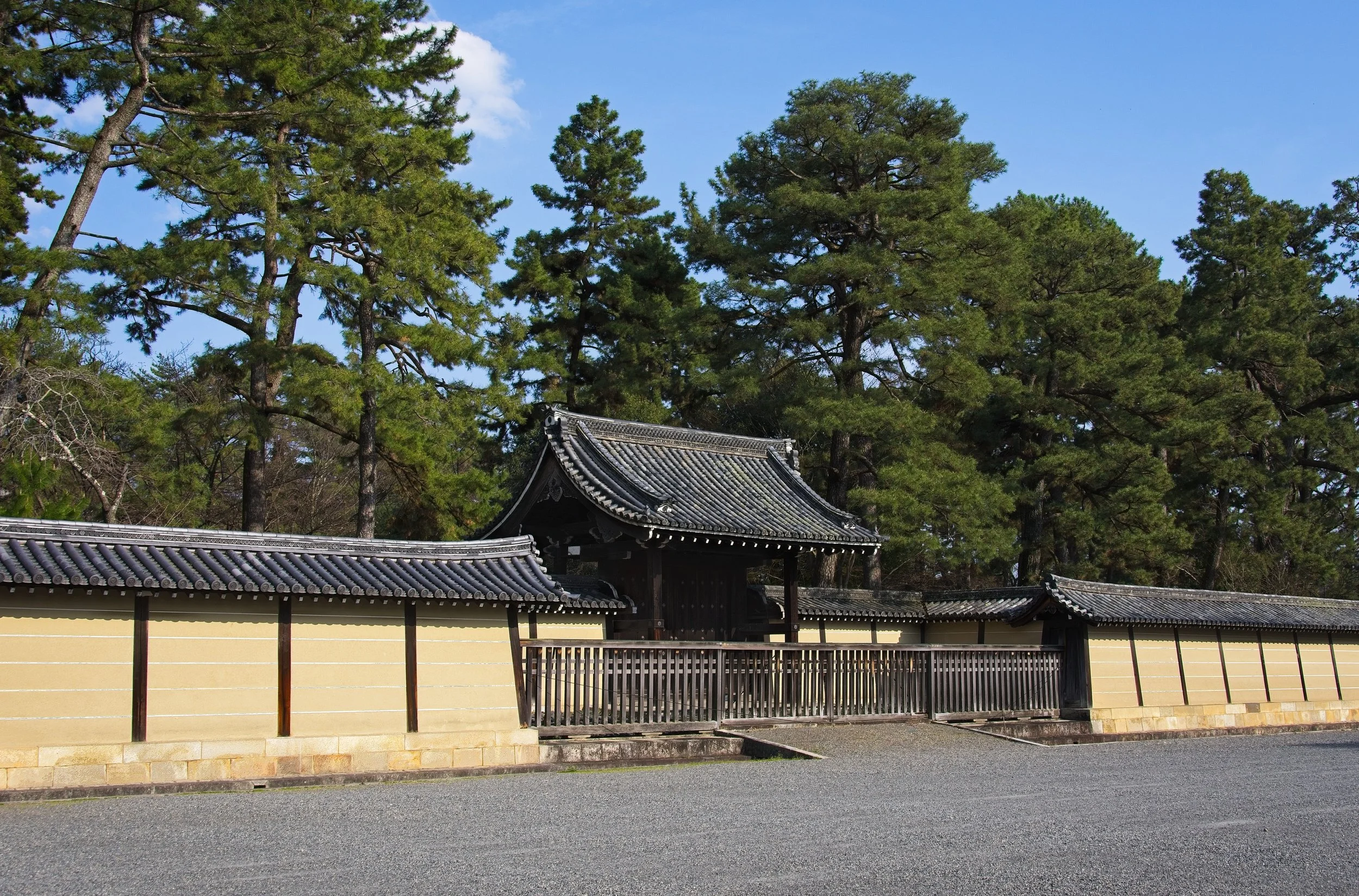
Imperial Palace Gardens
After this I made my way eastwards and dropped by the Shiramine shrine, which was fine, but nothing special. I then continued east before entering the spacious and dignified grounds of the Imperial Palace where I found a bench under a tree and took some time to relax before heading back to Kyoto Station.
CONCLUSIONS & TRAVEL TIPS
All in all, in was an exceptionally great day out in which everything I saw was new to me (with the exception of the Imperial Palace), proving once again that Kyoto is one of those rare cities that can stand decades of exploration and even then it won’t have yielded up all of its secrets.
Remember : If you’re planning on visiting Kyoto, give it longer than just a couple of days: a week is ideal. If you really must see the ‘big’ draws, spend no more than a day or two on that, then head out to explore the city on foot beyond those narrow confines, and if you want to actually interact with the natives beyond the stiff politeness of service staff in hotels and convenience stores, then travel alone.
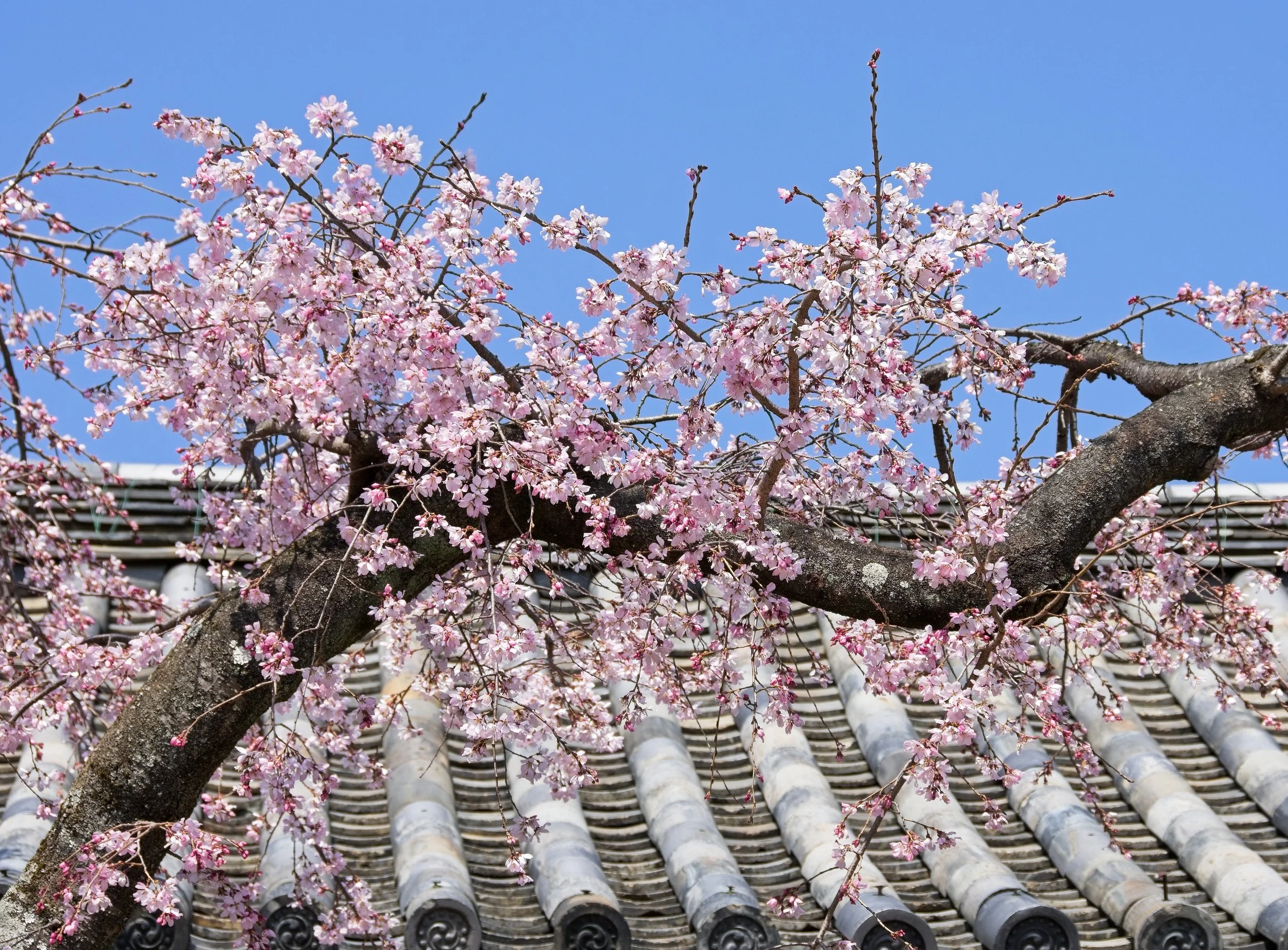
Myokaku-ji