A.I. - EMBRACE THE CHANGE
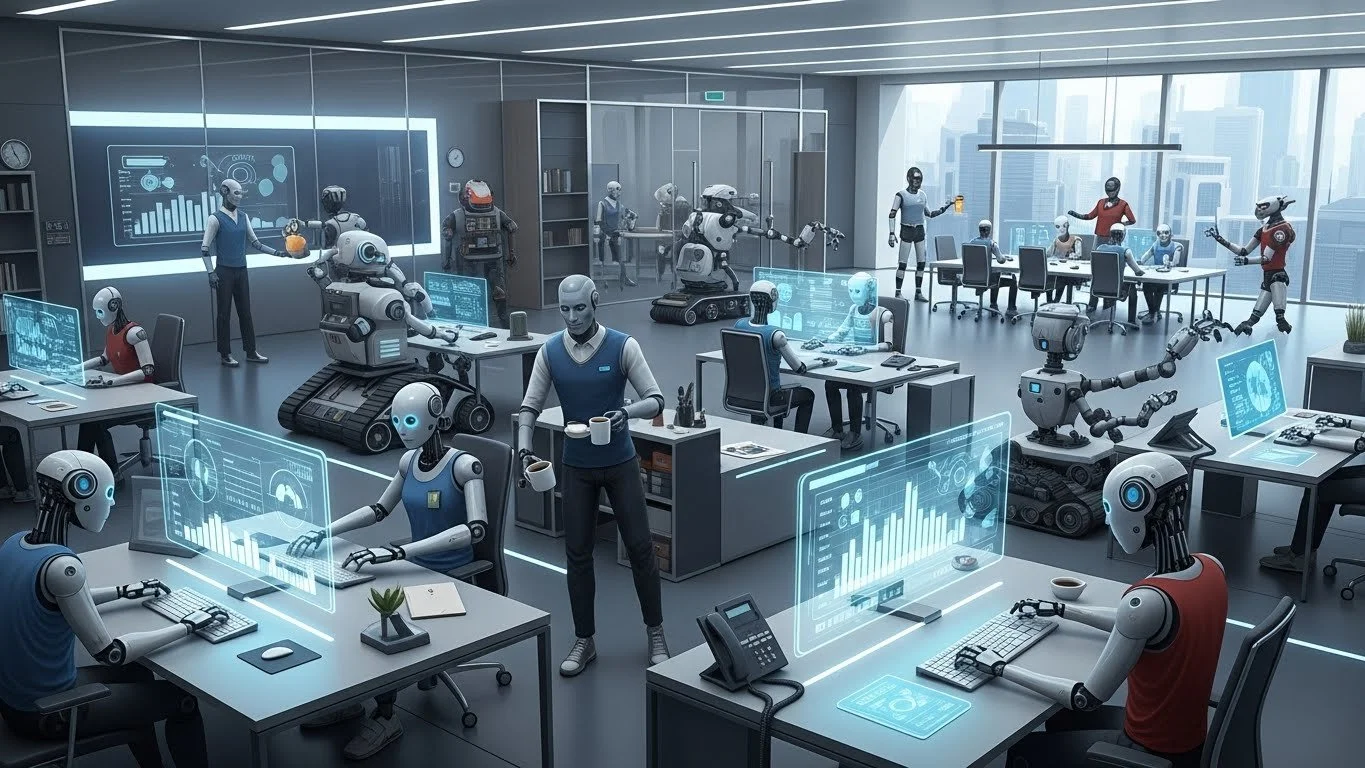
Everybody’s talking about AI, it’s often in the news, it’s discussed on every online platform and it’s slathered over advertising as a selling point for all manner of products. It seems to be something both good and bad : on the one hand, it’s the contents of a Pandora’s box that is going to get us all fired from our jobs. On the other, it’s the ultimate tool that can help make our lives much easier in so many ways.
EMBRACE THE CHANGE
I think, however, that most of the worries are unfounded and come from a fear of change. Most older people want things to stay as they are, but that’s not how the world (and indeed universe) works.
It’s far better to embrace change.
A look at history confirms this view. The human story is one of constant evolution punctuated by major changes caused by both natural events and technological breakthroughs.
Every time the latter has happened, there’s a conservative backlash from those doomsayers who are afraid of the future. They see the new development as a threat, but each time humans adapt to the new situation and it becomes normalised. What seems difficult or disturbing for the older generation is not a problem for the younger, which has changes itself to deal with the new paradigm. As a species, we’re pretty good at doing this.
EXAMPLES FROM THE PAST
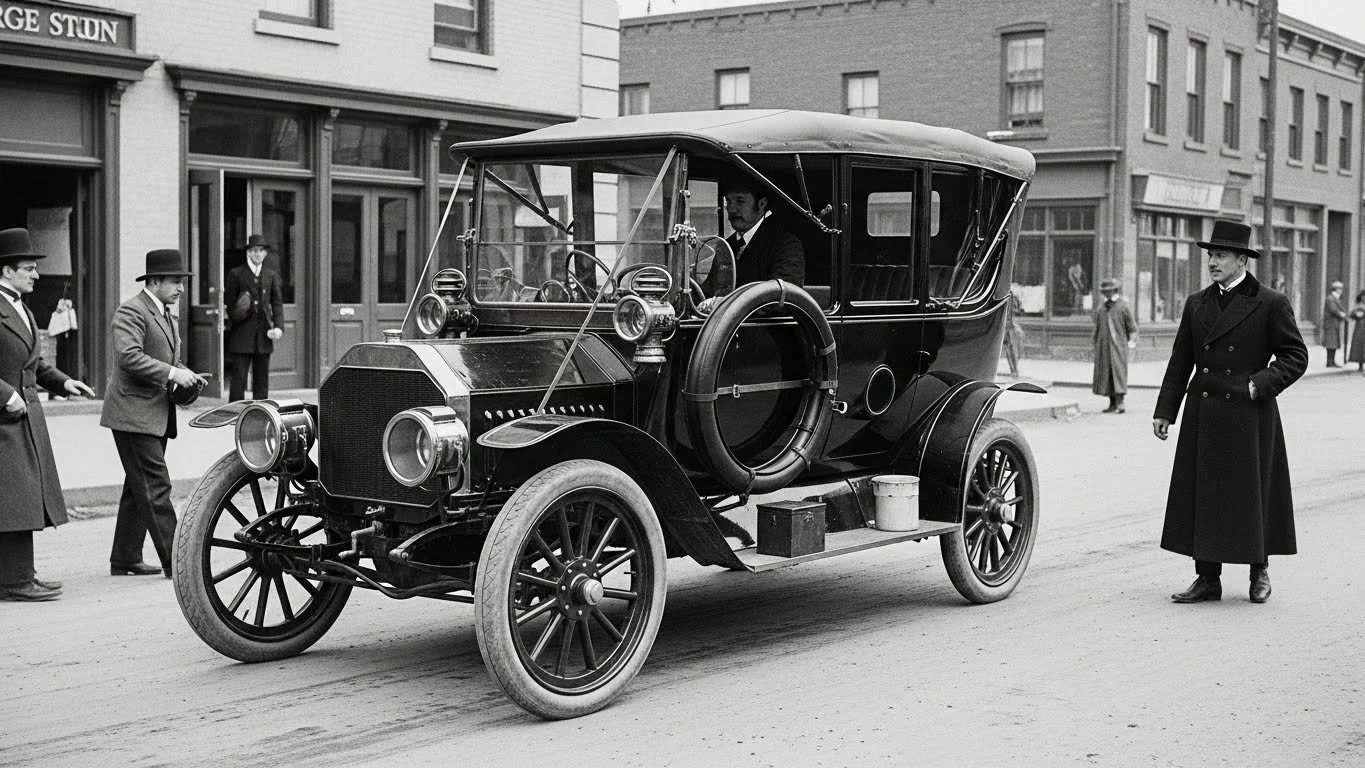
People forget or don’t know, but the introduction of the printing press, the car and other major developments were all once regarded in the way AI is now - a scary new portent for the end of the world as we know it.
It seems laughable, but in 1899 Henry H Bliss said in a newspaper after the first fatal accident, “The automobile has tasted blood… It is now an engine of death.” Similarly, an anti-car petition from 1903 said, “The auto…will become unmanageable. It will shy and rear up and plunge and maim or kill people. … It is a dangerous piece of mechanism.”
These fairly widespread fears of course soon waned and now the car is ubiquitous. Not that the worries about fatalities were unfounded - it’s just that we accept / ignore motoring casualties as an unfortunate side effect of the technology. We adapted and normalised it.
GETTING USED TO THE NEW PARADIGM
The same will inevitably happen with AI. People will get use to using it. We will find ways to overcome the problems of AI in education and develop new teaching methodologies. We will work out ways to differentiate fake historical photos from authentic ones.
With regard to employment, people will gradually be shifted into new areas and the system will reset itself with a new paradigm emerging. And yes, that could ultimately be one in which people are paid in order to buy the products the robotised industries churn out.
Might there be social unrest, breakdowns or even revolutions? Yep, sure, but it will sort itself out in the end.
That might sound frightening, but there’s no way of going back - how ever much you might wish for a return to some (mythical) golden age, it’s not going to happen - time’s arrow is only pointed in one direction.
CURRENT TEETHING TROUBLES
Right now we are going through the teething troubles of the first phase. As an example, take a look at YouTube. If you like history videos, you will have noticed the proliferation in that nice area of what is being termed ‘AI slop’ - poor quality inaccurate videos with bad computerised voice overs - which you can spot and block easily.
A lot of people, however, don’t have the ability to differentiate and will end up watching garbled nonsense thinking it’s fact. As just one example, AI history channels about World War Two have been spawning like crazy in the last couple of months, and they are getting a lot of views and making a ton of money. This is bad news for reputable channels whose devotion to research and accuracy is no longer going to be rewarded, as the superficially slick AI productions get the lion’s share of the audience.
The same thing is most likely happening with regard to music, too.
The younger generations will have to find their own way to navigate through it, not having the knowledge of their elders. But they will find a way - they always do, even if the ‘new normal’ ends up being something the older generation don’t like.
IS IT REALLY ANYTHING NEW?
But is the growing dominance of AI slop really any different to what has gone before? In any media there always has been a vast amount of trashy low-brow crap which has tended to get large audiences. In the Victorian age, for every ‘Wuthering Heights’ and ‘Tess of the D’Urbevilles’ there were hundreds of badly-written ‘penny dreadfuls’ churned out to formulas by hacks - and they sold like hot cakes.
Back in the 80s song writing teams like Stock, Aitken and Waterman spat out hundreds of vacuous pop tunes for their beautiful minions to sing, and the public lapped it up.
Conservative music YouTuber Rick Beato was lauding a song by Oasis a few years ago, and then more recently berated AI for studying hit songs and reformulating them into something new but somehow recognisable - the exact thing that Oasis did. The only difference with AI is that can do all of this much faster.
THE GOOD SIDE OF AI

On the good side, I increasingly find things like ChatGPT a versatile and useful tool. I was skeptical at first, but over the last year or so I’ve discovered its potential and value.
If, for example, you’re interested in a certain author and want to know where to start with their books, you could do a Google search, and will be directed to various places on the web which may or may not contain the information you’re looking for.
Or, you could post a query on somewhere like Reddit and wait for the mixed bag of answers you’ll receive.
Now, however, you can just ask ChatGPT. In an instant it will sift through and summarise the relevant info and give you a detailed answer, all in one place. Often it will then ask you to specify things to refine the search further, or even suggest other related tasks it can do.
It’s an amazingly efficient way of getting the information you want while cutting out all of the irrelevant garbage the internet is flooded with.
The only thing you need to be mindful of is revealing too much personal information since all of your interactions are saved.
In addition, certain types of query might result in incorrect answers. You just have to get used to it and recognise its limitations.
CONCLUSION
I suppose the moral of the story is this : dogged resistance to inevitable change is pointless. Rather than getting all conservative and backward-looking, embrace it. Or rather, use the parts of the new technologies that are going to work for you, and ditch the worthless ones. Those of the older generation should have the knowledge and experience to do this, while the younger generation is the one that is more likely to fall into traps through naivety.
But above all, get used to it, because it’s not going away.