Everyone’s heard of Charles Dickens and the Brontë sisters. If you’ve actually read a few Victorian novels you may also have ventured into the works of Thomas Hardy, Wilkie Collins, Elizabeth Gaskell and George Eliot. But this is just the tip of the iceberg - a quick glance at a list of bestselling authors of the second half of the nineteenth century reveals a whole host of names most people, even avid readers, have never heard of.
In the last couple of years I’ve been exploring Victorian literature in some depth, and here are ten excellent novels I’ve discovered that have somehow fallen out of favour. If you already have a few of the famous books of the era under your belt, or even if you’re completely new to the genre, these are all well worth a go.
The following descriptions are spoiler free, and I’ve also included information about how you can obtain the novels.
SHERIDAN LE FANU - “UNCLE SILAS” (1864)
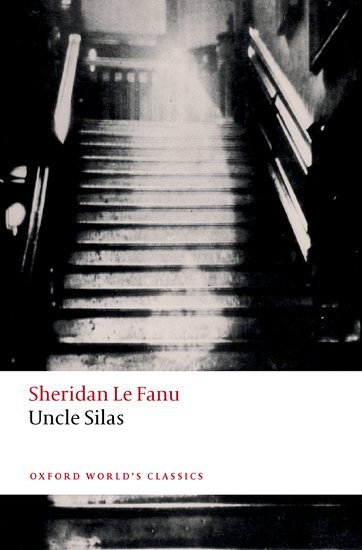
Shieridan Le Fanu (1814-1873) was an Irish novelist best known for the early vampire story ‘Carmilla,’ which personally I didn’t enjoy very much. However, prior to that he penned the excellent sensation / gothic novel ‘Uncle Silas.’ This is the tale of 17 year old Maud Ruthyn, whose late father’s will inexplicably places her under the guardianship of creepy and disgraced Uncle Silas who lives on a gloomy and rundown estate. Throw in a few memorably dodgy characters, a growing feeling of unease, and some startling plot twists and you have all the ingredients necessary for an intriguing page-turner. It’s readily available in paperback from Oxford World Classics.
RHODA BROUGHTON - “COMETH UP AS A FLOWER” (1867)
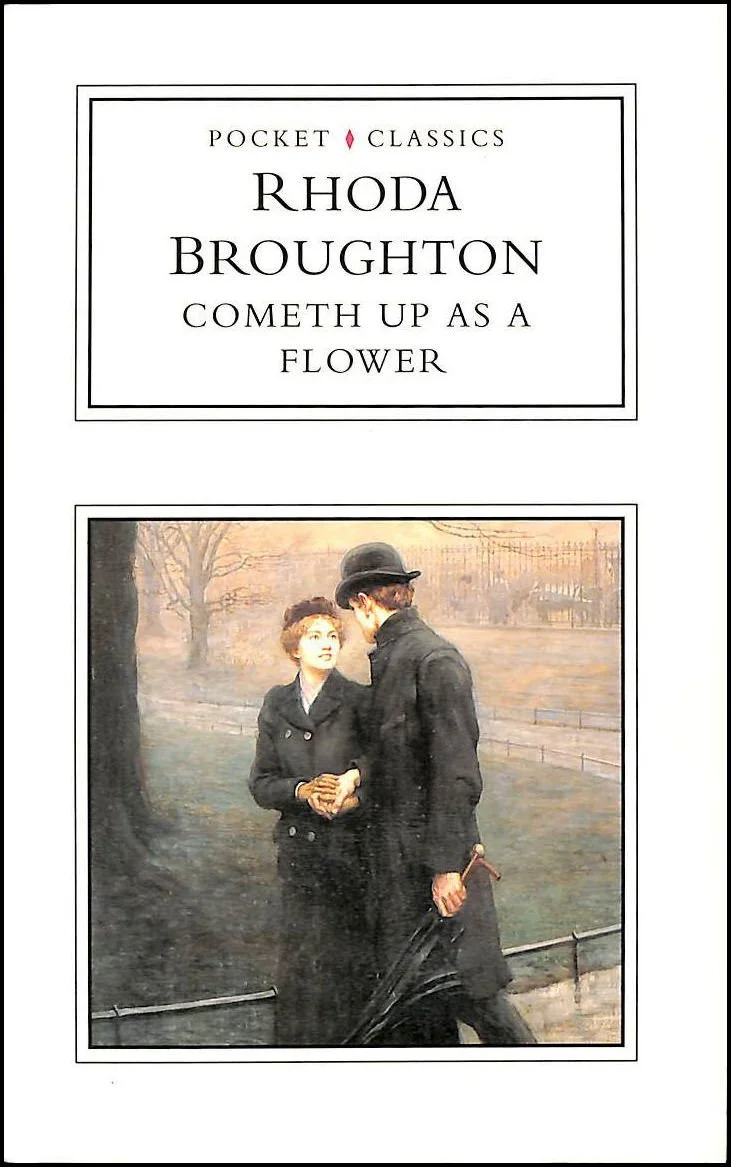
Rhoda Broughton (1840-1920) was a Welsh novelist who topped the bestseller lists in the latter half of the nineteenth century, and just happened to be Sheridan Le Fanu’s niece. ‘Cometh Up As a Flower’ was her second publication and most popular novel. It is a sensation novel peppered with witticims and amusing comments - the prose positively sparkles and is a delight to read. The story, which was considered scandalous in its time, due to the unladylike behaviour and demeanour of its protagonist, tells of Eleanor, a childish and sarcastic but unworldly teenager who adores her old dad Sir Adrian and is envious of her more knowing and beautiful older sister Dolly. The family are toffs but have fallen on hard times and can barely keep up appearances. Eleanor meets and falls in love with Richard McGregor, a soldier - of the right class, but penniless, and Dad doesn’t approve. Meanwhile Hugh Lancaster, an older unglamorous man is trying for her, but she despises him. From here begins a dramatic tale that is a thoroughly enjoyable read. It’s hard to understand why a writer as talented and popular as Broughton has fallen by the wayside. Some of her works were published in paperback by the likes of Virago Press at one time, but these days the only way to get hold of her novels is from Delphi Classics.
GEORGE GISSING - “THE ODD WOMEN” (1893)
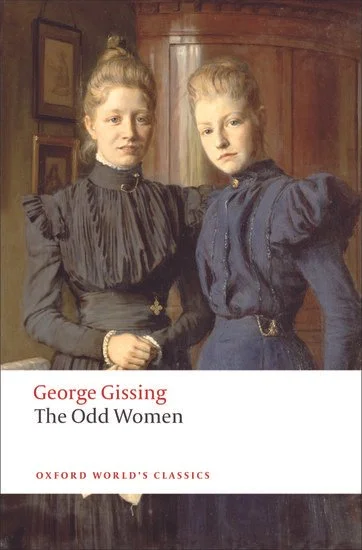
George Gissing (1857-1903) was a bestselling late Victorian author of ‘realist’ fiction, somewhat like the great French novelist Émile Zola. His novels are gritty and he dares to peer beneath the thin veneer of Victorian values, espousing proto-feminist and socialist ideas and portraying the working classes in a much more natural light. ‘The Odd Women’ concerns the plight of unmarried females who are in that state either from lack of opportunity or lack of desire, and the serious disadvantages they faced in Victorian society as a result. It focusses at first on the youngest of three sisters, Monica, who is the only one who can find a marriage partner. Her impoverished sisters envy her, but her married life soon takes a turn for the worse. Monica was once a pupil in an institution run by two women, Rhoda Nunn, a strident feminist, and Miss Barfoot, who aim to educate and broaden the horizons of women. Gissing is much less sentimental than most Victorian authors, and dares to write openly about infedility and the ideas of rejecting marriage as an institution. ‘The Odd Women’ is available in paperback from Oxford World Classics.
DINAH CRAIK - “JOHN HALIFAX, GENTLEMAN” (1856)
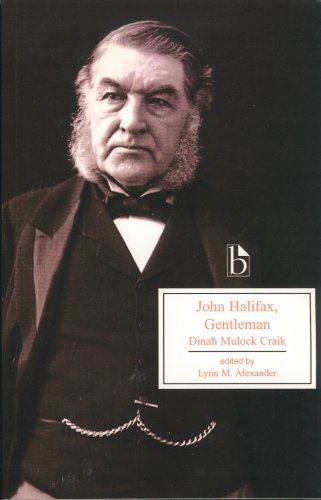
This wonderful novel only has a paltry 352 ratings on Goodreads compared to, for example, ‘The Moonstone’ by Wilkie Collins, which has 101,103. And yet Craik (1826-1887) was also a best-selling author in her day, showing just how obscure she has become. ‘John Halifax, Gentleman,’ is a very unusual novel in that the narrator, who is afflicted with some disability which prevents him from marrying, charts the life of his friend John through whom he lives vicariously. The title of the book is surely ironic, in that John is most certainly not a gentleman - in fact he is little more than a beggar at the start of the book. The message seems to be a very subversive one for Victorian society - that if you play the part well enough, you can break the class boundaries. In addition, there is just the hint of homoeroticism in the close friendship between the two men. The book also contains an incredibly moving scene containing some of the saddest passages I have ever read in literature, although a reviewer on Goodreads thought it was 'just ‘typically mawkish Victorian oversentimentality’ - which just goes to show how two readers can interpret a text in two completely different ways. ‘John Halifax, Gentleman’ is available from a few dodgy-looking print-on-demand purveyors, but I got the ebook from Delphi Classics and Project Gutenberg has it for free.
MARGARET OLIPHANT - “HESTER” (1883)
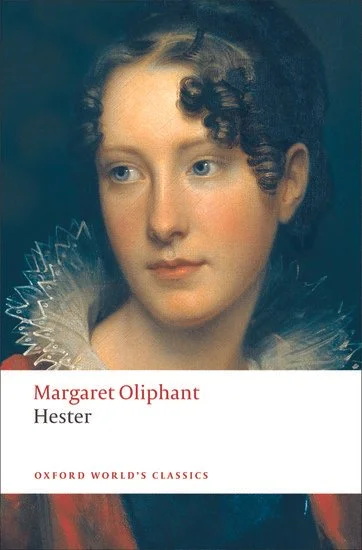
Margaret Oliphant (1828-1897) was an incredibly prolific Scottish author who had to write to support her family. Despite her mighty output (maybe around eighty novels and forty other types of publication), quality doesn’t seem to be an issue : aside from ‘Hester,’ I have read the first three works in her ‘Carlingford’ series (her most popular publications), and her prose is always excellent. ‘Hester’ is the tale of two women, the eponymous teenager who is forced, with her mother, to go and live on the charity of Catherine Vernon, a powerful and stubborn matriarch and bank owner. The situation is tense and awkward, since it was Hester’s father, a cousin of Catherine, who nearly caused the bank to collapse before fleeing to France to evade the consequences. The novel charts the mutual dislike of the two women and how that changes over a series of events. It can be seen as a proto-feminist work in that there are no major male characters and Hester and Catherine are both powerful, opinionated women. This great novel is available from Oxford World Classics as a paperback.
MARY ELIZABETH BRADDON - “AURORA FLOYD” (1863)
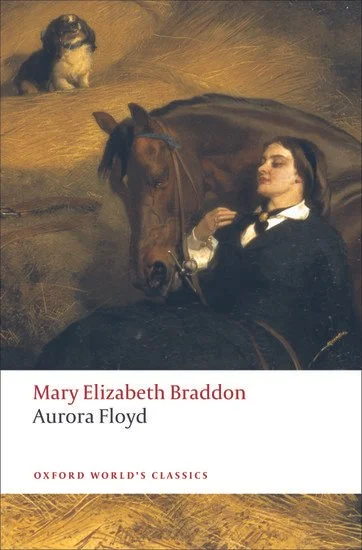
Braddon (1835-1915) may be the least obscure writer on this list. However, despite her massive output and great popularity during the second half of the nineteenth century, she is only remembered for the early sensation novel ‘Lady Audley’s Secret,’ which is a pity as her oeuvre conatins many gems and she is a fine writer. ‘Aurora Floyd’ concerns the raven-haired daughter of rich banker Archibald Floyd, who comes back from France with some kind of secret between her and her father. Two suitors vie for her hand, leading to complications, but eventually her past begins to catch up with her, unleashing high drama and entertaining plot twists. In short, everything you’d expect from a sensation novel. A great page-turner, full of subtle undercurrents of sexuality and not without its funny moments, for example when Braddon describes Aurora as being a great beauty although on closer inspection ‘possessed of too low a hairline and a dubious nose.’ (I’m paraphrasing, as I can’t find the exact quote). Available in paperback. from Oxford World Classics.
GEORGE MOORE - “ESTHER WATERS” (1894)
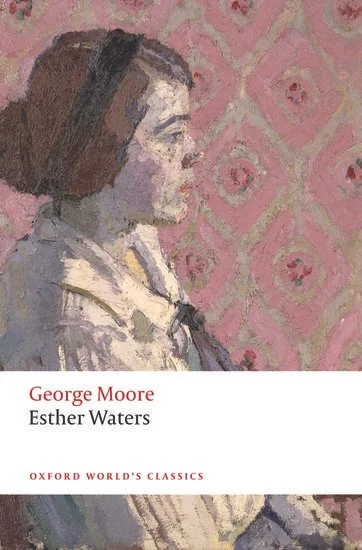
George Moore (1852-1933) was a late Victorian / Edwardian Irish writer favouring the realist approach of Émile Zola (like George Gissing above), and was apparently in turn an influence on a certain James Joyce. ‘Esther Waters’ is the gritty tale of the eponymous protagonist, a young working class girl who takes a position as a servant in a big house. Here things take a turn for the worst and she is forced to leave owing to various misfortunes and predjudices (I’m keeping this very vague to avoid spoilers), and the next years are full of appalling struggle to keep herself out of the workhouse. A surprisingly realistic novel for the time, and one which focusses on the working classes rather than the toffs, portraying their lives with brutal honesty including direct references to prostitution, and a sympathetic view of the difficulties facing single proletarian women. It’s available in paperback from Oxford World Classics.
ELLEN WOOD - “EAST LYNNE” (1861)
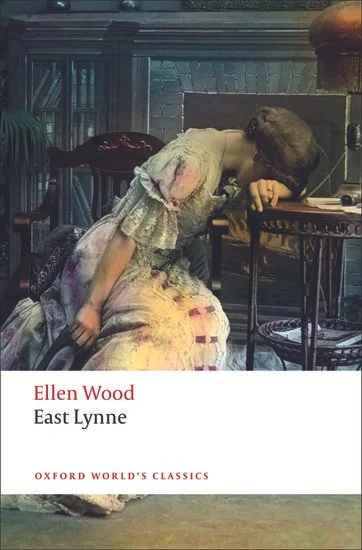
Ellen Wood (1814-1887) was a Victorian novelist whose stature at the time was such that even Leo Tolstoy was a fan. She was prolific, publishing about fifty works including novels in the sensation and supernatural fiction genres. ‘East Lynne’ is her most well-known offering in the former category, and as a consequence is replete with a full compliment of plot twists, discovered secrets, mistaken identities, violence and general turmoil among her upper class protagonists. This was one of the first Victorian novels I read, and I enjoyed it enormously - it swept aside motions I had of nineteenth century fiction being dull, sedate and prim. ‘East Lynne’ was so popular that it was frequently adapted for the theatre in both the UK and USA, has been filmed seven times, and has been serialised on TV twice, the last time being by the BBC in the 1980s. It’s available in paperback from Oxford World Classics.
CHARLES READE - “GRIFFITH GAUNT” (1866)
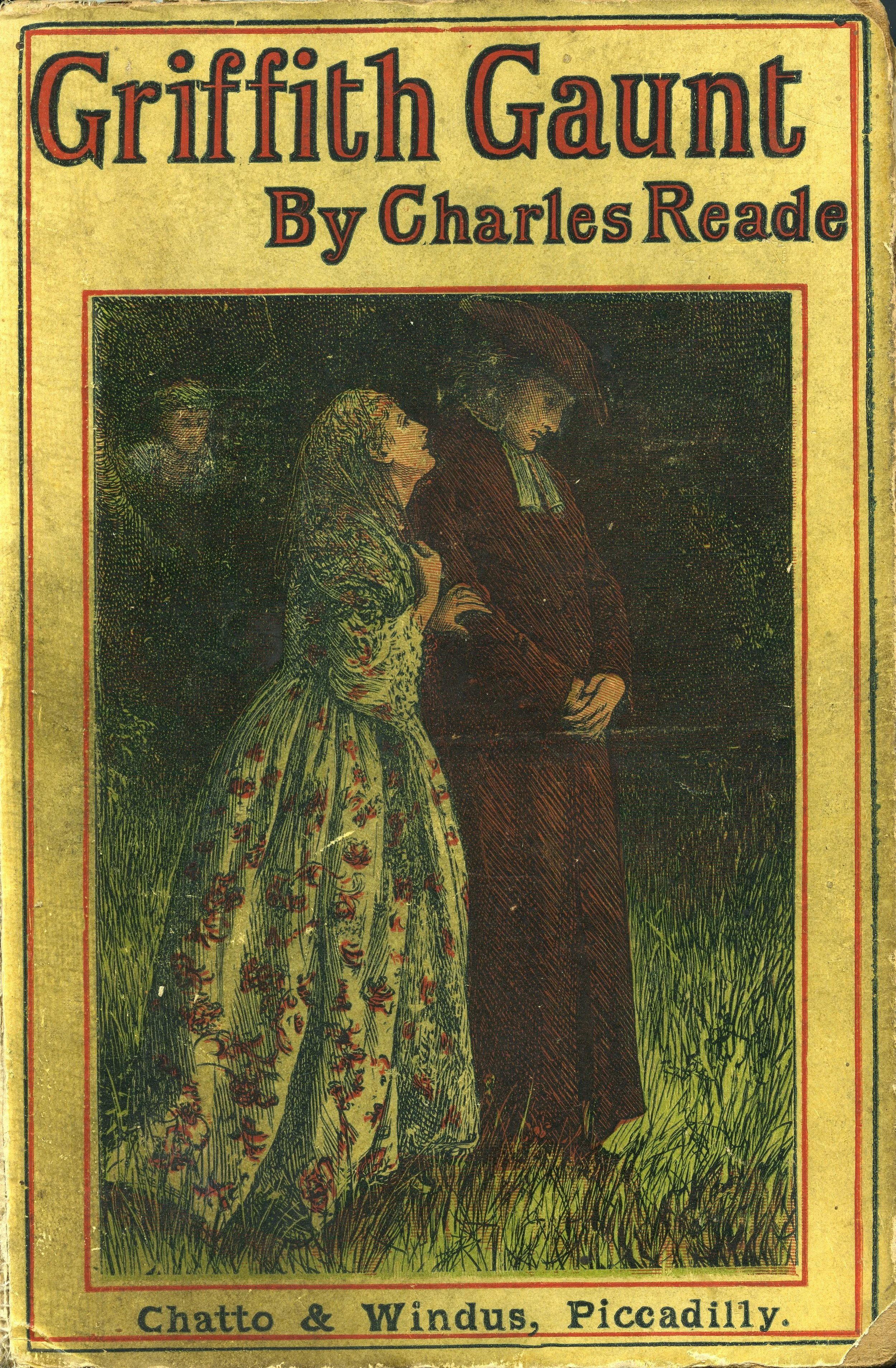
Charles Reade (1814-1884) was a dramatist who also wrote novels. Another best-seller of his time, and apparently one of the highest-paid, he is now one of the most obscure on this list, again without much justification. ‘Griffith Gaunt’ is a well-written sensation novel concerning the eponymous hero who loves the fickle Catholic Kate Peyton. She, however, can’t decide between Gaunt and a rival, George Neville. You would think that when she does eventually choose one of the two, cosy upper-class Victorian married life would ensue, but this is a sensation novel and therefore the chaos is just about to begin. Lurking Catholic priest confessors, adultery, bigamy, murder and illegitimatacy aren’t far off so you can understand why some libraries of the day refused to hold Reade’s works as they were deemed to be immoral. Complex and entertaining, and with a fairly surprising ending, this novel is highly recommended. Your best bet is to get a copy of this is Delphi Classics as an ebook.
RICHARD MARSH - “THE BEETLE” (1897)
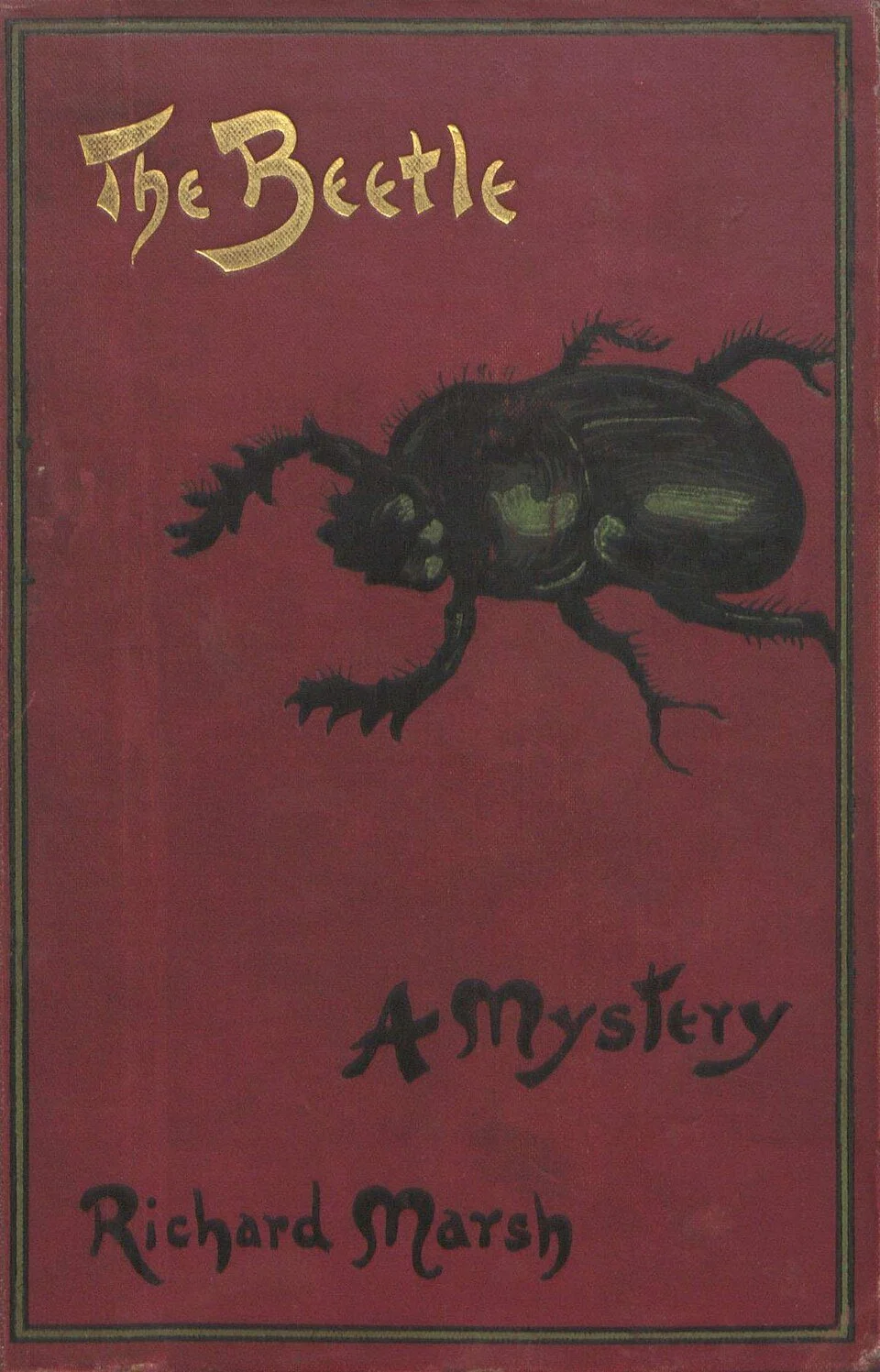
Richard Marsh (1857-1915) was another late Victorian / Edwardian writer who despite being extremely popular in his time, is now almost entirely forgotten. ‘The Beetle’ is a gothic horror novel which was published the same year as Bram Stoker’s ‘Dracula’ and apparently sold way more copies, and yet now is largely unknown. The story begins with a rising politician named Lessingham who had a horrific experience in his youth in Egypt where he narrowly escaped the clutches of an incarnation of the Egyptian god Isis. Now it seems that this mysterious entity has come to London to get him. Told from multiple perspectives including that of Atherton, an inventor and Lessingham’s rival in love, this creepy and intriguing tale could not be classed as high literature, but it’s certainly a fun read. Hard to find in paperback, I recommend the cheap ebook collected works from Delphi Classics.